Carnets - Jupyter (with scipy): The Full Data Science Stack on Your iPad
Professional-grade Python notebooks in your pocket. Run Scipy, Pandas, and Scikit-Learn locally with a complete offline Jupyter environment—no cloud required.
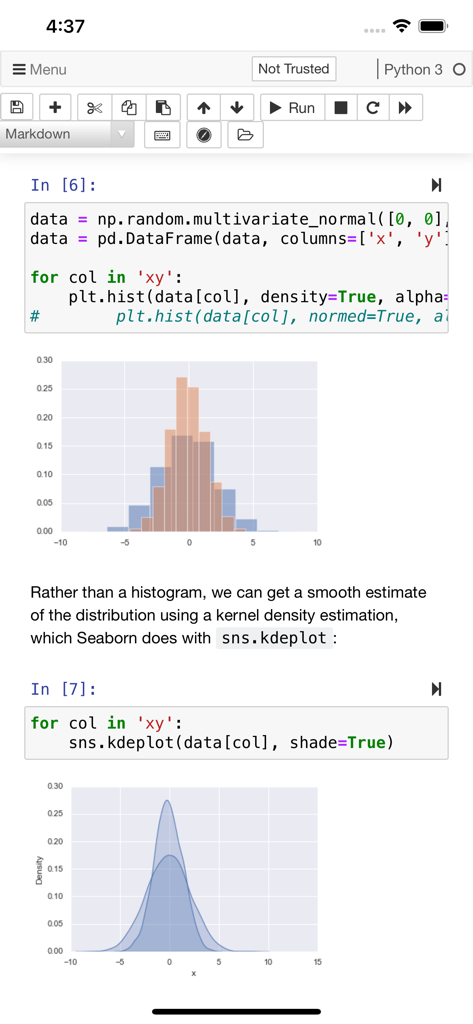
Python Jupyter notebook on mobile showing data science code and statistical plots
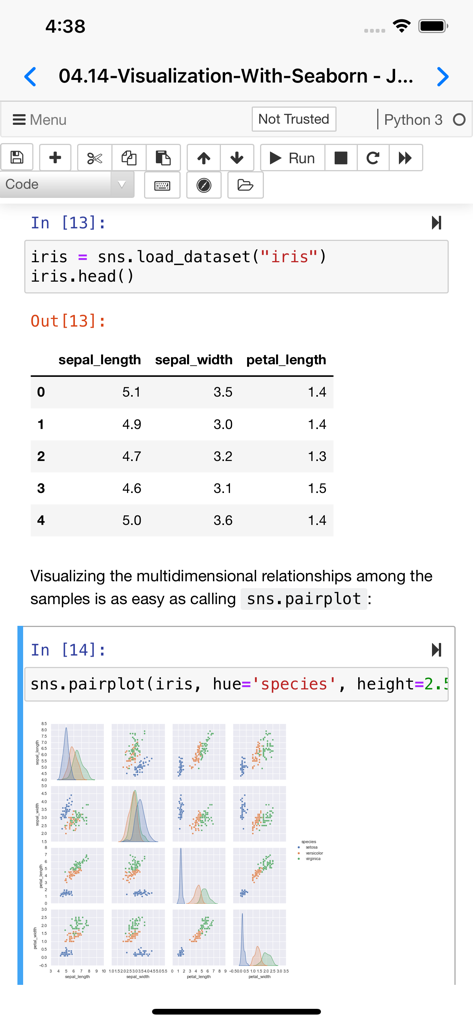
Carnets app displaying a Jupyter Notebook with a Seaborn pair plot visualization
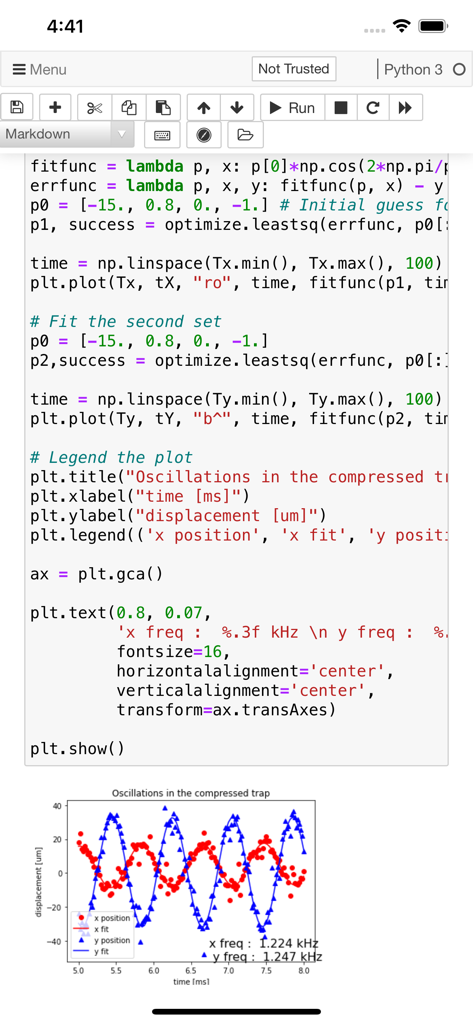
Python code and data visualization plot in the Carnets Jupyter notebook interface
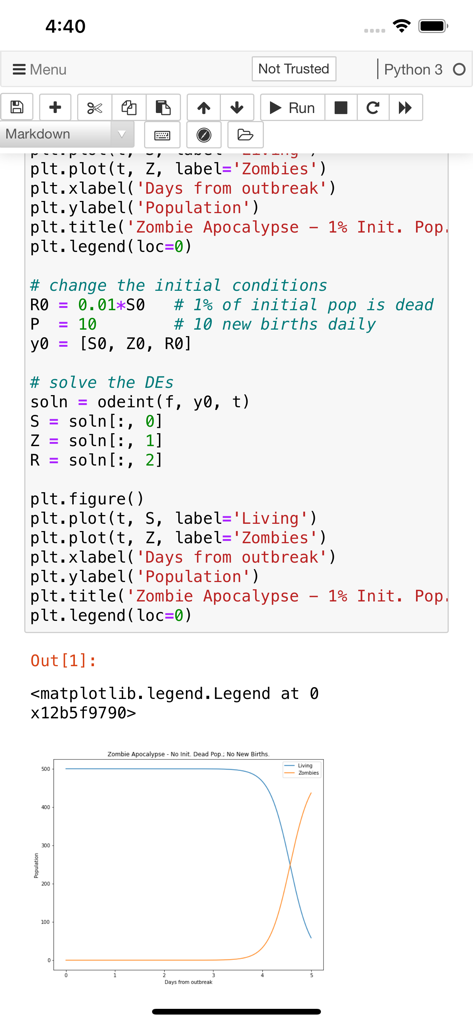
A mobile Jupyter Notebook screen showing Python code and a generated line graph for a data visualization model.
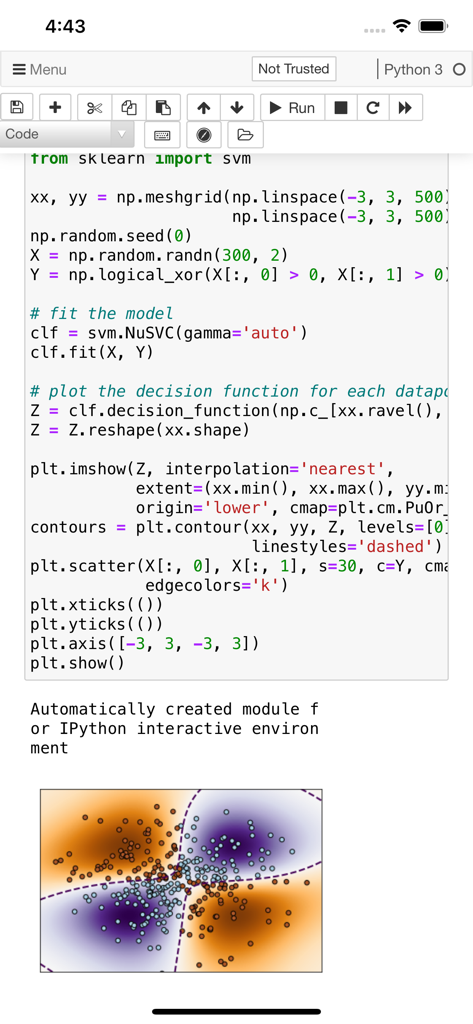
Carnets app screen showing a Jupyter notebook with Python code and an SVM model visualization plot
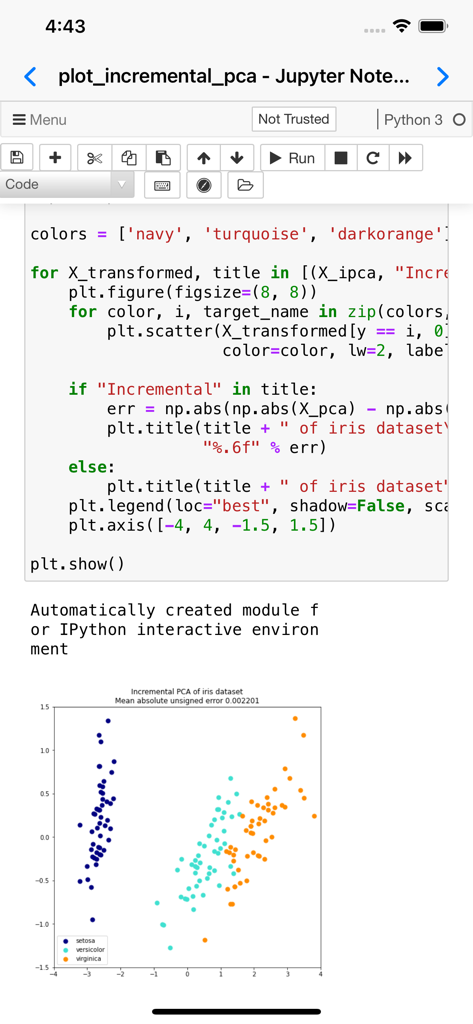
Interface of the Carnets app showing a Jupyter notebook with Python code and a scatter plot for data visualization
Desktop Power, Mobile Freedom
The tools that make this app stand out, trusted by 99K+ users.
🛫
Run Locally, Work Anywhere
Skip the cloud. Execute code and visualize data without an internet connection, ensuring your work stays private and your battery stays efficient.
📈
Built-in Scientific Stack
Access Scipy, Scikit-Learn, and Pandas right out of the box. No more struggling with C-library installations on mobile—just pure, pre-compiled power.
⌨️
Optimized for iPad Pro
Maximize productivity with JupyterLab support, full keyboard integration, and Split View multitasking to research and code simultaneously.
About the app
Everything you need to know about Carnets - Jupyter (with scipy).
Description
Jupyter notebooks are a powerful tool used in education and research. You can write small snippets of Python code and observe the result on screen, combine with paragraphs of text, using Markdown.
Carnets provides a complete, stand-alone, implementation of Jupyter notebooks. Everything runs on your device, using the embedded Python interpreter; you do not need an internet connection. Compared to the standard version (Carnets), this app adds several packages targeted for scientific computation and learning: scipy, sklearn, seaborn and coremltools. You can switch between standard notebooks and the more modern jupyterlab using the Settings app.
Of course, all the packages included with the standard app are present too: numpy, simply, matplotlib... To see the full list of installed packages, type "%pip list" in a code window. You can add more packages using "%pip install packageName", but only if they are pure Python.
You can share your notebooks with other apps and also open notebooks or directories managed by other apps.
Partial list of installed packages: astropy, babel, bokeh, cartopy, cryptography, cvxopt, Fiona, geopandas, geopy, gym, inequality, libpysal, lxml, mapclassify, matplotlib, networkx, nltk, numpy, openCV, pandas, parso, pillow, pyFFTW, pyproj, qutip, rasterio, regex, Rtree, scikit-learn, scipy, seaborn, segregation, shapely, soupsieve, spopt, statsmodels, sympy, wordcloud.
Latest Version
1.9.0
Size
2.1 GB
First Released
May 3, 2021
Start Coding Without Limits
Join 99K+ professionals and students using the most powerful local Jupyter environment on iOS. Get your complete scientific stack today.
App information, icons, screenshots, and descriptions displayed on this page are sourced from the Apple App Store and are the property of their respective developers. Download estimates and rankings are based on MWM's proprietary models and may not reflect actual figures. This page is provided for informational and analytical purposes only.
Believe this page infringes your intellectual property? File a dispute