
This page is not an official page of the app or its developer, but an independent editorial publication created for informational and commentary purposes. Unless expressly stated otherwise, neither the app nor its developer is affiliated with, endorsed by, sponsored by, authorized by, or otherwise officially connected with MWM, Apple, Google Play, the app publisher, or the app's developer, and nothing on this page implies that the app was developed using MWM's services. Any trademarks, logos, screenshots, and other content remain the property of their respective owners.

Pixel Density Calculator
Calculate PPI, DPI, and aspect ratios with mathematical precision. The essential, lightweight utility for UI/UX designers, developers, and tech enthusiasts who value exact hardware specs.
Downloads
0User Rating
Total Ratings
0Publisher
Category
UtilitiesLocales
1Latest Version
1.1Size
3.0 MBFirst Released
Nov 7, 2022Precision Specs for Every Screen
The essential utility for UI/UX designers and hardware enthusiasts to verify display quality with mathematical accuracy.
Scientific PPI Calculation
Use the Pythagorean theorem to calculate exact Pixels Per Inch and Dots Per Inch for any display device instantly.
Design Export Ready
Never guess your asset scaling again. Determine precise @2x or @3x requirements for professional design handoffs.
The following screenshots and description are sourced directly from the app's official store listing and are the property of the app developer.
App Store
Screenshots
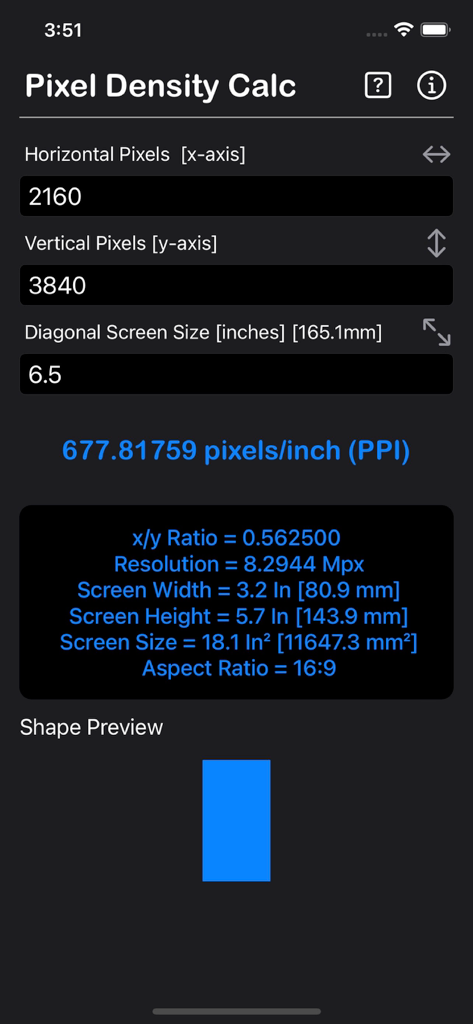
Pixel Density Calculator app interface showing a PPI calculation result and display specifications for a mobile screen
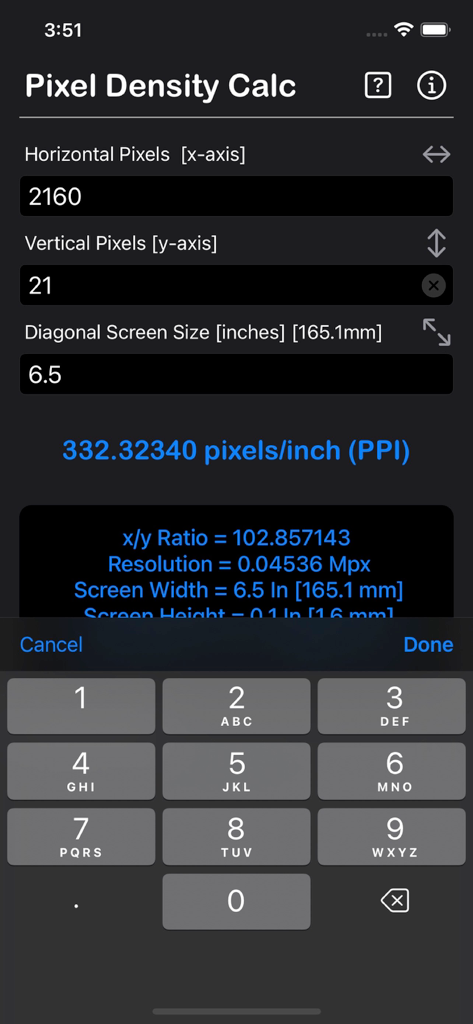
Pixel Density Calculator app interface showing screen resolution inputs and calculated PPI results
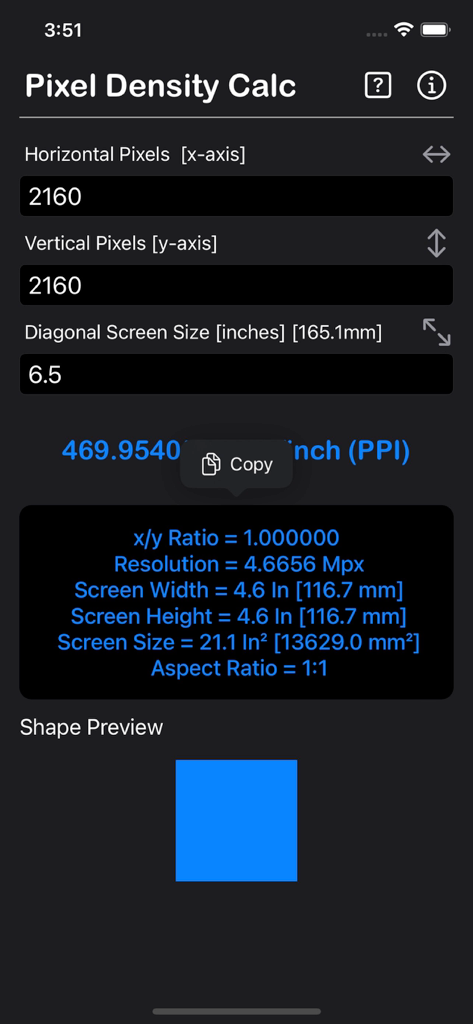
Pixel Density Calculator interface showing PPI calculation for a 6.5 inch screen
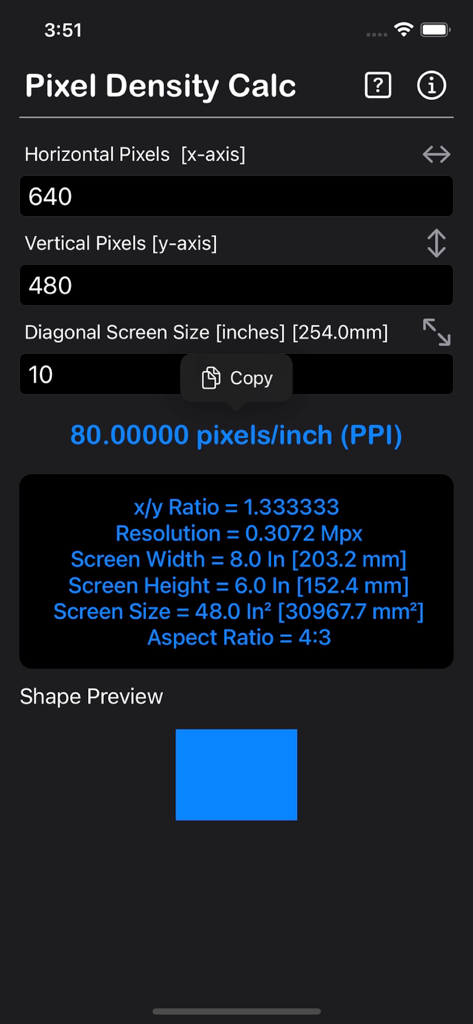
Pixel Density Calculator interface showing ppi and screen resolution results
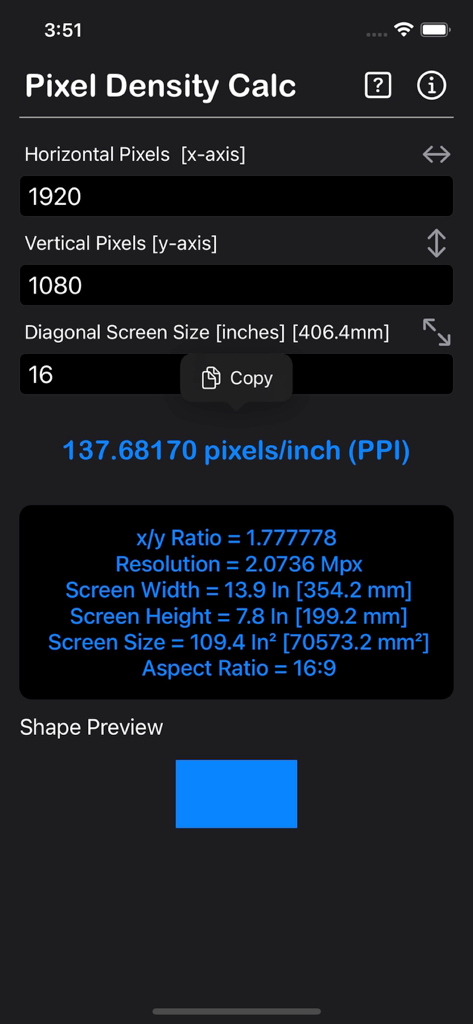
Pixel Density Calculator app interface showing ppi calculation results for a display.
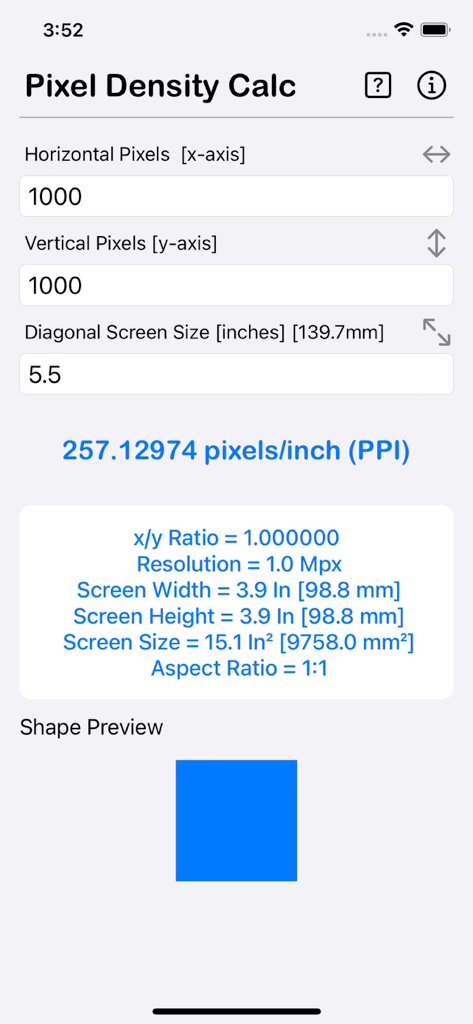
Interface of the Pixel Density Calculator app showing a calculated result of 257.13 PPI based on pixel dimensions and screen size.
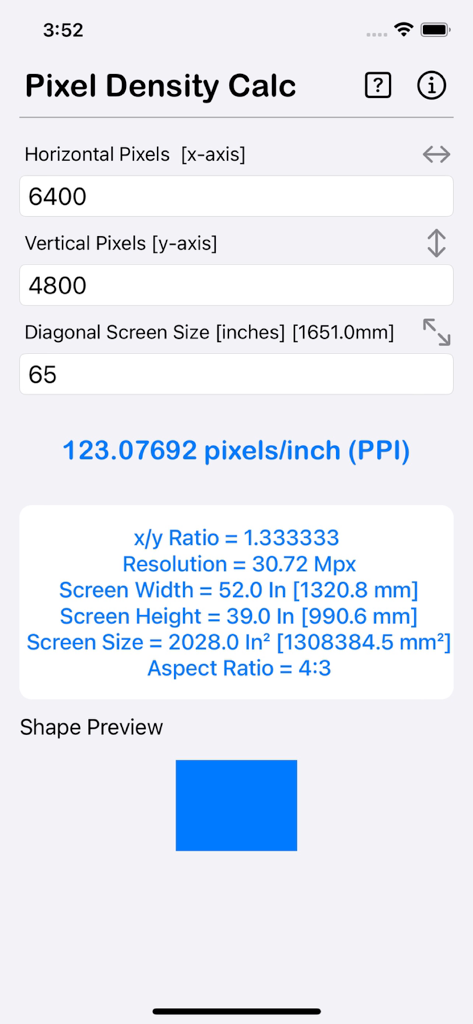
Interface of the Pixel Density Calculator app showing a PPI result for a high resolution screen
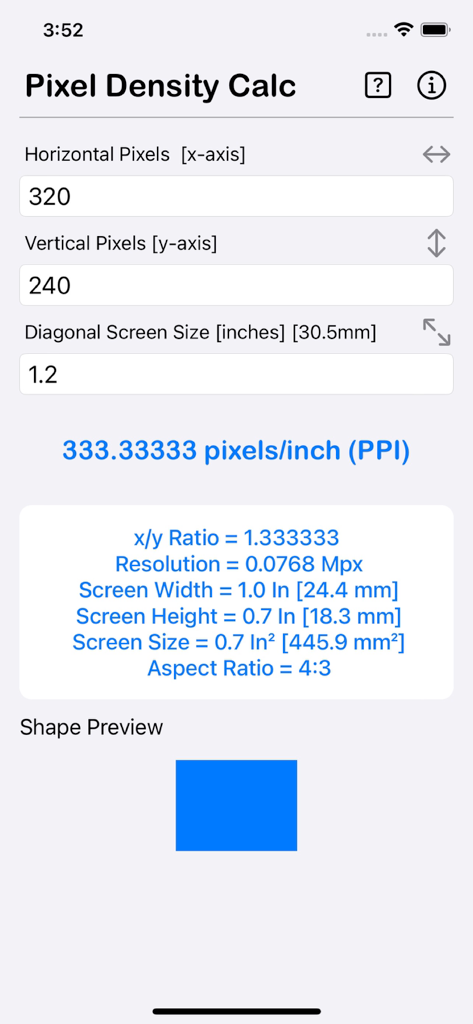
Pixel Density Calculator app interface showing PPI results and screen dimensions
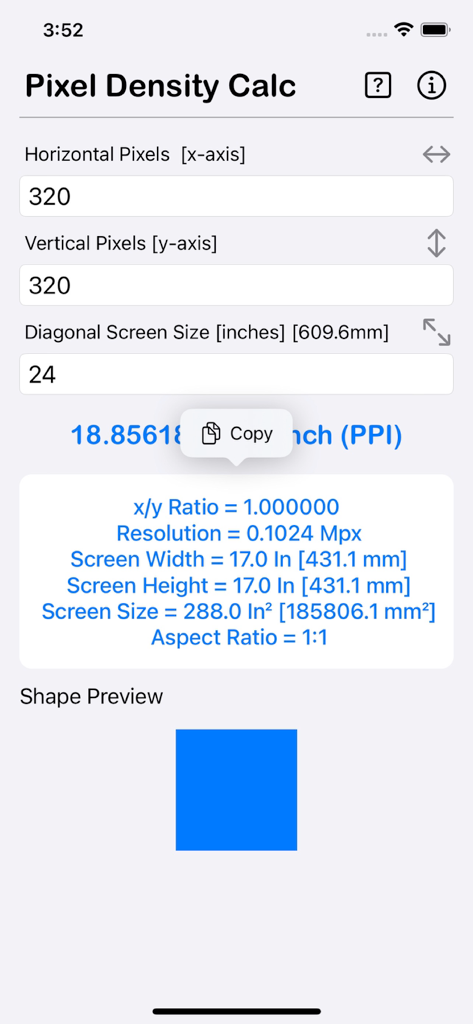
Pixel Density Calculator app interface showing PPI results and aspect ratio calculation
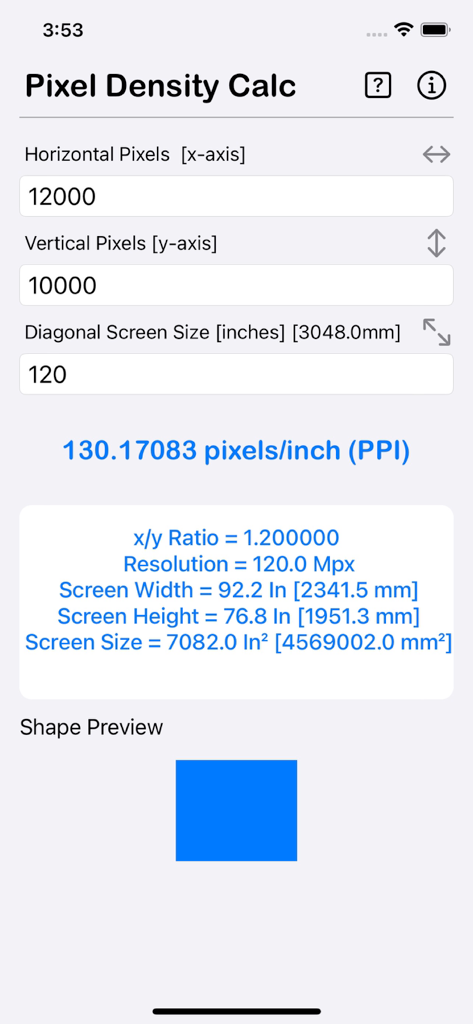
Pixel Density Calculator app showing PPI results and display dimensions
Description
Download
More Like This
Top-ranked apps in the same category

Google LLC

Google Chrome
Google LLC

中国移动(手机营业厅)
China Mobile Online Services Co., Ltd.

Google Authenticator
Google LLC

Buddy VPN
Frederic Hennes Sprl

gov.br
Servicos e Informacoes do Brasil

中国电信-全国统一官方服务平台
CHINA TELECOM Corporation Ltd.

Cleanup: Phone Storage Cleaner
DEEP FLOW SOFTWARE SERVICES - FZCO

Microsoft Edge: AI Browser
Microsoft Corporation
This page is not an official page of the app or its developer, but an independent editorial publication created for informational and commentary purposes. Unless expressly stated otherwise, neither the app nor its developer is affiliated with, endorsed by, sponsored by, authorized by, or otherwise officially connected with MWM, Apple, Google Play, the app publisher, or the app's developer, and nothing on this page implies that the app was developed using MWM's services. Any trademarks, logos, screenshots, and other content remain the property of their respective owners.